
![[background image] image of a farm landscape](https://cdn.prod.website-files.com/69bbab3f37c9a4e4e05b2012/6a6a02f156ea48cdd77f9b23_carbon-removal-vs-carbon-reduction.png)
Table of Content
Imagine your bathtub is overflowing. Water is pouring from the tap faster than it can drain. The floor is getting flooded, and every minute the damage becomes worse.
What would you do first?
Most people would turn down the tap. But stopping there wouldn't solve the problem. The bathtub is already full. Until you open the drain and remove the excess water, it will continue to overflow. Climate change works in much the same way. The atmosphere has become our overflowing bathtub.
The Carbon Bathtub
Think of atmospheric carbon dioxide (CO₂) as the water filling a bathtub.
- The tap represents the greenhouse gases we continue to emit from fossil fuels, industry, transportation, and agriculture.
- The water represents the CO₂ that has accumulated in the atmosphere over the past two centuries.
- The drain represents the Earth's natural and engineered ability to remove carbon from the atmosphere.
For decades, humanity has left the tap running faster than the drain can empty the tub. The result is today's climate crisis. The obvious response is to turn down the tap. But there's another question we often overlook: What do we do about the bathtub that's already full?
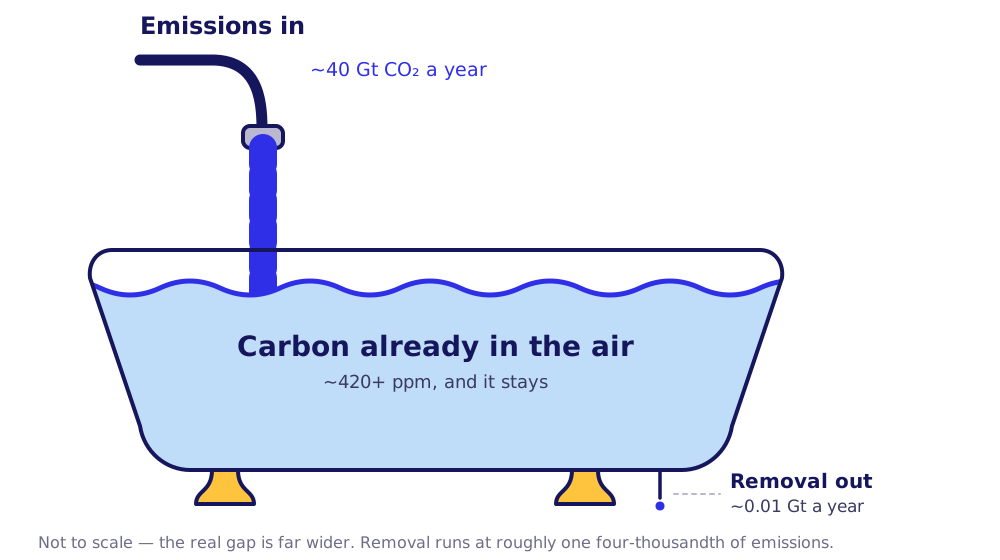
Carbon Reduction Turns Down the Tap
Carbon reduction prevents new emissions from entering the atmosphere. Businesses reduce emissions by improving energy efficiency, switching to renewable electricity, electrifying operations, redesigning products, and optimizing supply chains. Every tonne of CO₂ avoided slows the rate at which the bathtub fills. This is why reducing emissions must always be the first priority. The cheapest and most effective tonne of carbon is often the one that is never emitted.
But even if every company aggressively decarbonizes today, one challenge remains. The bathtub is already overflowing.
Carbon Removal Opens the Drain
Carbon removal addresses a different problem. Instead of preventing future emissions, it removes carbon dioxide that is already in the atmosphere and stores it safely for decades, centuries, or even permanently. Solutions range from nature-based approaches like reforestation to innovative technologies such as biochar, enhanced rock weathering, and Direct Air Capture. These approaches don't replace emissions reductions.
They perform a job that reductions simply cannot do: they reduce the amount of carbon that has already accumulated in our atmosphere.
This distinction is critical. Carbon reduction changes the future flow of emissions. Carbon removal changes the existing concentration of carbon in the atmosphere.
Why Carbon Removal Is Becoming More Essential than Ever
For years, climate action focused almost exclusively on reducing emissions—and rightly so. But today, scientists agree that reductions alone are unlikely to stabilize global temperatures.
Even if the world rapidly decarbonized, we would still be left with hundreds of billions of tonnes of excess CO₂ already warming the planet. Certain industries, including aviation, shipping, cement, steel, and agriculture, will also continue to produce residual emissions that cannot be eliminated overnight. In other words, turning down the tap is necessary. But it doesn't empty the bathtub.
Carbon removal fills this critical gap. It addresses historical emissions that reductions cannot reach — carbon already in the atmosphere, taken back out and stored.
Looking Ahead
Climate action is becoming more diverse.
Reducing emissions remains essential. Carbon removal is a separate and additional action: it funds real CO₂ being taken out of the atmosphere. Funding carbon removal does not make you carbon neutral, and it is not an offset — C:Real does not offer neutrality or offsetting claims.
These approaches are complementary rather than competing.
By combining emissions reductions with support for high-quality carbon removal, organizations can contribute to both today's climate goals and tomorrow's solutions.
Contact Us
Have a question or want to explore a C:Real® pilot? Reach out and we’ll get back to you soon.


support@c-real.io